The first stage is the briefing. You learn which questions to ask about the audience, the topic and the target duration, and how to record the answers so that nothing is guessed later. Instructors supply sample briefings, and you practise reading them for gaps before a single line is drafted.
The second stage is the outline. You turn the briefing into a short structure a producer could approve: an opening, the main points in order, a closing line and a rough time for each part. Working at this level keeps the later draft focused and makes changes cheap.
The third stage is drafting for the ear. Sentences stay short, wording stays plain, and every line is read aloud before it stays in the text. You count words against seconds, mark optional cuts and note where the presenter can breathe, so the script suits a live delivery.
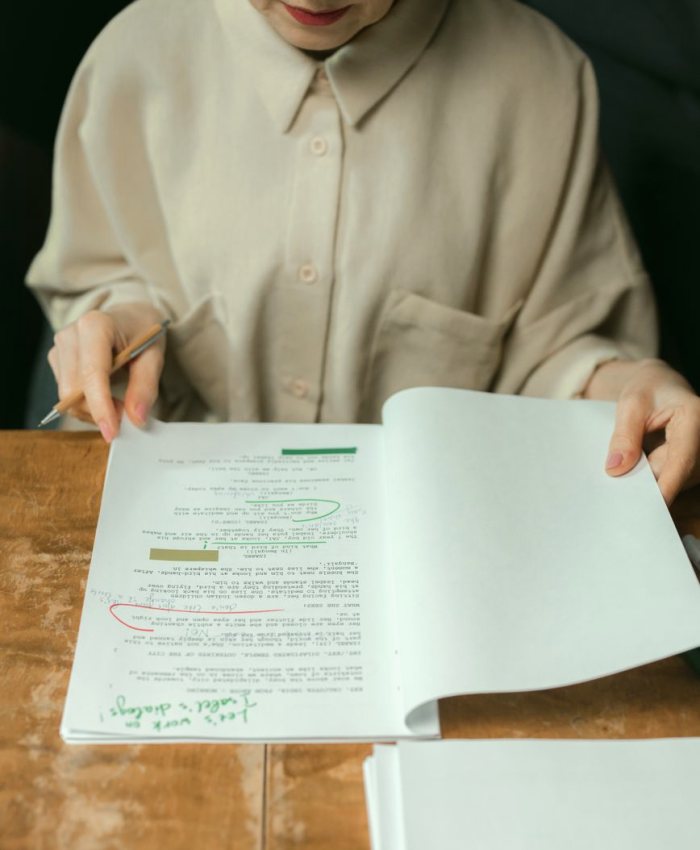
The fourth stage is revision. You receive written feedback on a full draft, decide which comments change the script and which do not, and return a clean second version. Revision is taught as a normal part of the job, not as a sign that the first draft failed.
Throughout, short original demonstration scripts on neutral educational and cultural topics show each technique in use. They are there to be read aloud, timed and taken apart, so you see how a choice on the page sounds in a presenter's voice.